The landscape of South Moravia is unlike anything else in the Czech Republic. Where Bohemia offers forests, rocks, and river valleys, Moravia presents open agricultural land sculpted into flowing contours by centuries of farming. The hills roll in gentle waves, punctuated by solitary trees, chapel spires, and narrow dirt roads that trace the ridgelines. For photographers, this is a region where composition matters more than dramatic weather.
Why South Moravia Attracts Photographers Worldwide
In the last decade, the Moravian hills have gained international recognition among landscape photographers. Images of the undulating fields, stripped of crops in late autumn or freshly planted in spring, regularly appear in competitions and publications. The appeal is straightforward: the terrain creates natural leading lines, the color palette shifts dramatically with each season, and the low population density means clean, uncluttered compositions.
The region sits between the towns of Kyjov, Hodonín, and Znojmo, roughly 250 km southeast of Prague and 60 km south of Brno. Most of the best-known photography locations are within a 30-km radius of the village of Kyjov.
Key Locations and How to Reach Them
The Hills near Kunkovice and Svárov
The most photographed slopes lie between the villages of Kunkovice and Svárov. These fields are planted in alternating strips of wheat, barley, and rapeseed, which during May and June create vivid bands of green and yellow that follow the terrain contours. In autumn, after harvest, the bare soil reveals brown and ochre tones that are equally photogenic.
Access is via minor roads branching off the D2 motorway south of Brno. Parking is limited to field edges and village pull-offs. A pair of rubber boots is recommended, as you will likely walk along muddy field margins to reach the best vantage points.
The Chapel of St. Barbara (Kaple sv. Barbory)
This small chapel sits alone on a hilltop surrounded by open fields. It has become one of the most recognizable subjects in Czech landscape photography. The chapel works as a focal point in compositions shot from the surrounding hills, particularly when backlit at sunrise or when fog wraps around its base.
The chapel is located near the village of Šardice. The best shooting positions are from the elevated fields to the northwest, where you can frame the chapel against the undulating horizon line. A 70-200mm lens is ideal for compressing the layers of hills behind the chapel.
The Cross near Rostěnice
A simple roadside cross standing on a field edge near Rostěnice has become another iconic Moravian subject. It works best in winter, when snow covers the surrounding fields and the dark wooden cross provides a stark point of contrast. Shooting with a telephoto lens (150mm+) from the road above compresses the rolling field lines into abstract patterns.
Seasonal Guide to Moravian Photography
Spring (April to May): The rapeseed fields bloom in late April, turning entire hillsides bright yellow. Green wheat provides contrast. Morning dew on the fields catches the early light. This is the most colorful season and the most popular with visiting photographers.
Summer (June to August): The wheat ripens to gold, and the landscape takes on a warm, uniform tone. Combine this with summer thunderstorms for dramatic cloud formations over the flat terrain. Sunset shoots from elevated positions work well when cumulus clouds are present.
Autumn (September to November): After harvest, the fields are plowed in alternating directions, creating textured patterns that photograph best in low-angle sidelight. Morning fog is increasingly common as temperatures drop, which adds depth to images shot from hilltops.
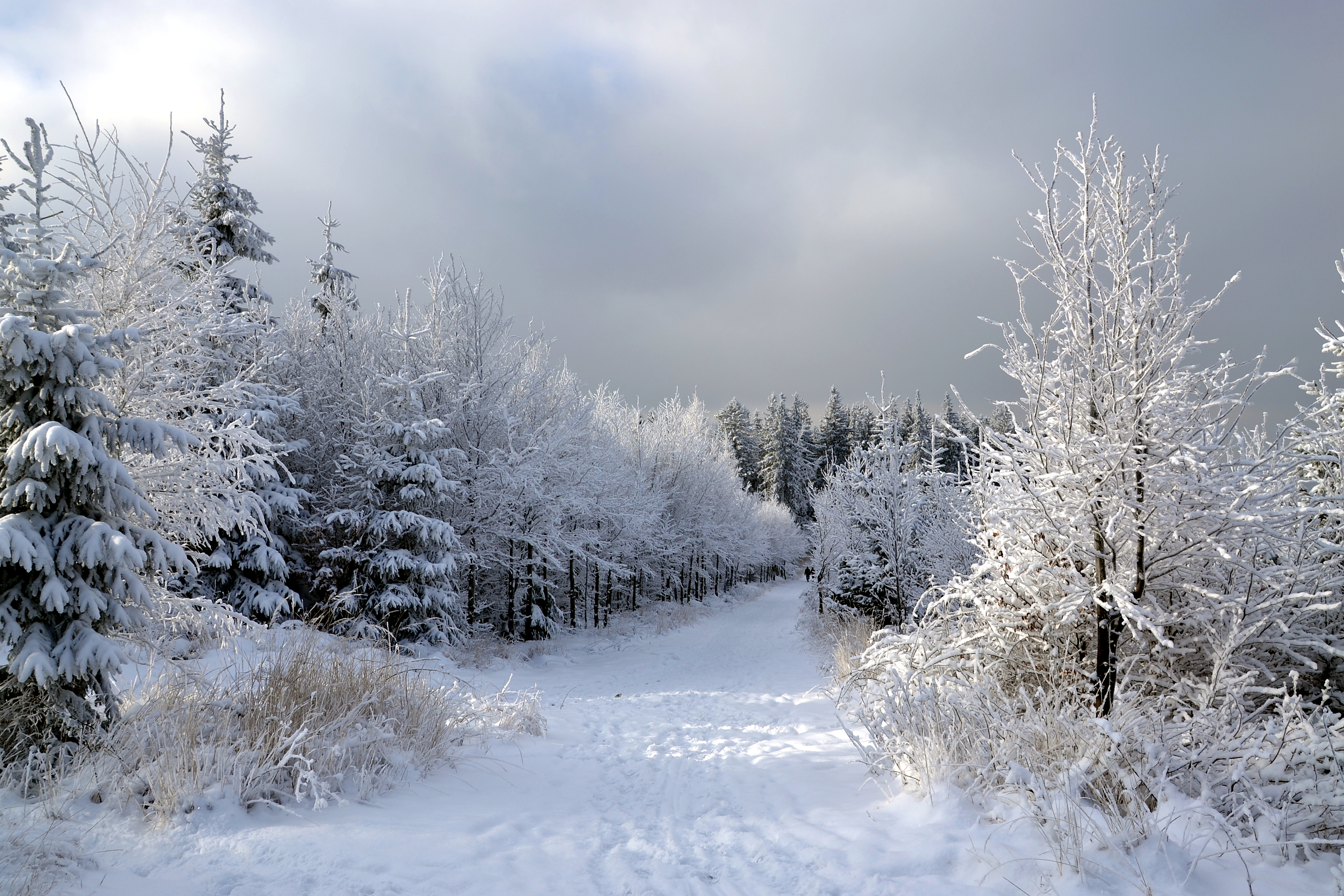
Winter (December to February): Snow transforms the hills into a minimalist scene. The landscape becomes a study in curves, shadows, and subtle tonal gradations. Overcast skies work here because they eliminate harsh shadows and allow the gentle terrain shapes to define the composition on their own.
Composition Strategies for Rolling Hills

The challenge in Moravian landscape photography is not finding subjects; it is simplifying the composition. The terrain offers lines and curves in every direction, and it is easy to produce cluttered images with no clear visual anchor.
- Use a telephoto lens (70-200mm): This compresses the layers of hills and emphasizes the wave-like patterns. Wide-angle shots tend to flatten the terrain and lose the sense of depth that makes these landscapes distinctive.
- Identify a single anchor point: A lone tree, a chapel, a cross, or even a tractor in a field. Place this element using the rule of thirds or along a natural leading line in the terrain.
- Shoot during sidelight: The rolling surface of the hills catches light unevenly, creating highlights and shadows that reveal the three-dimensional shape of the land. Front light flattens everything. Backlight creates silhouettes. Sidelight — from sunrise or sunset — is the optimal condition.
- Wait for atmospheric layers: Fog, haze, and low cloud add depth by separating foreground hills from background ridges. These conditions occur most reliably on autumn mornings when the air temperature drops overnight.
Camera Settings for Moravian Landscapes
Aperture: f/8 to f/11 provides the sharpest results across the frame with most lenses. Avoid f/16 and smaller unless you need extreme depth of field, as diffraction softens the image at smaller apertures on high-resolution sensors.
ISO: Keep it at 100 or 200. The light is almost always sufficient when you are shooting at dawn or dusk with a tripod, which you should be using for every session in Moravia.
Filters: A circular polarizer is useful in spring to darken the sky and boost the green-yellow contrast in the fields. A graduated ND filter (2-stop soft) helps balance a bright sky with darker foreground terrain, particularly during sunrise.
Practical Information
The nearest airport is Brno (BRN), but most international visitors fly into Prague (PRG) and drive. The drive from Prague takes approximately 2.5 hours. Accommodation in the Kyjov and Hodonín areas is limited to small pensions and guesthouses. Booking in advance is advisable during the spring photography season (late April to mid-May).
For updated maps and trail information, check the Czech Tourism South Moravia page. The PhotoPills app is recommended for planning sunrise and sunset positions relative to specific locations.

